
INTRODUCTION
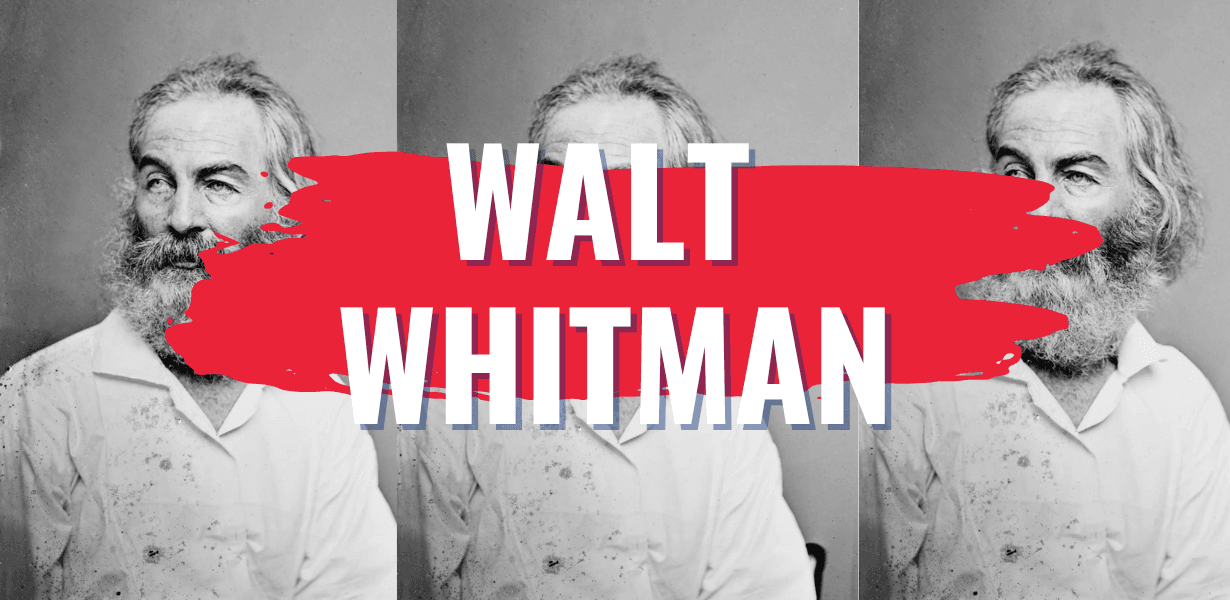
Walt Whitman was an American poet, writer, and journalist. He is one of the most important and influential poets in the history of American literature. His most famous book of poetry, Leaves of Grass, changed the way people thought about poetry. Whitman’s writing focused on democracy, nature, love, the human body, and the everyday lives of Americans. He believed that every person, rich or poor, was important and beautiful.
(Walt Whitman foi um poeta, escritor e jornalista americano. Ele é um dos poetas mais importantes e influentes da história da literatura americana. Seu livro de poesia mais famoso, Leaves of Grass (Folhas de Relva), mudou a forma como as pessoas pensavam sobre poesia. A escrita de Whitman focava em democracia, natureza, amor, o corpo humano e a vida cotidiana dos americanos. Ele acreditava que toda pessoa, rica ou pobre, era importante e bonita.)
EARLY LIFE
Primeiros Anos
Walt Whitman was born on May 31, 1819, in West Hills, a small town on Long Island, New York. He was the second of nine children. His father, Walter Whitman Sr., worked as a carpenter and farmer. His mother, Louisa Van Velsor Whitman, was a strong and loving woman who had a big influence on him.
(Walt Whitman nasceu em 31 de maio de 1819, em West Hills, uma pequena cidade em Long Island, Nova York. Ele era o segundo de nove filhos. Seu pai, Walter Whitman Sr., trabalhava como carpinteiro e fazendeiro. Sua mãe, Louisa Van Velsor Whitman, era uma mulher forte e amorosa que teve grande influência sobre ele.)
When Walt was four years old, his family moved to Brooklyn, a growing city across from Manhattan. There, Whitman attended school for a few years but had to stop when he was 11 to help support his family. He started working as an office boy and then as a printer’s apprentice. He read many books and newspapers and loved learning, even though he was no longer in school.
(Quando Walt tinha quatro anos, sua família se mudou para Brooklyn, uma cidade em crescimento do outro lado de Manhattan. Lá, Whitman frequentou a escola por alguns anos, mas teve que parar aos 11 anos para ajudar a sustentar a família. Ele começou a trabalhar como office boy e depois como aprendiz de impressor. Ele leu muitos livros e jornais e adorava aprender, mesmo não estando mais na escola.)
EARLY CAREER
Início da Carreira
Whitman worked in printing and journalism during his teenage years. He became a school teacher at the age of 17 and taught in small schools for about five years. However, he did not enjoy teaching and decided to return to writing and editing newspapers. He worked for several newspapers in New York and later started his own paper called the Long Islander.
(Whitman trabalhou com impressão e jornalismo durante sua adolescência. Ele se tornou professor aos 17 anos e deu aulas em pequenas escolas por cerca de cinco anos. No entanto, ele não gostava de ensinar e decidiu voltar a escrever e editar jornais. Trabalhou para vários jornais em Nova York e depois fundou seu próprio jornal chamado The Long Islander.)
In the 1840s, he also wrote short stories and articles. Many of them were published in popular magazines. At this time, his writing was more traditional and not very different from other writers of the time. But slowly, he began to develop his own style.
(Na década de 1840, ele também escreveu contos e artigos. Muitos deles foram publicados em revistas populares. Nessa época, sua escrita era mais tradicional e não muito diferente da de outros escritores da época. Mas, aos poucos, ele começou a desenvolver seu próprio estilo.)
LEAVES OF GRASS
Folhas de Relva
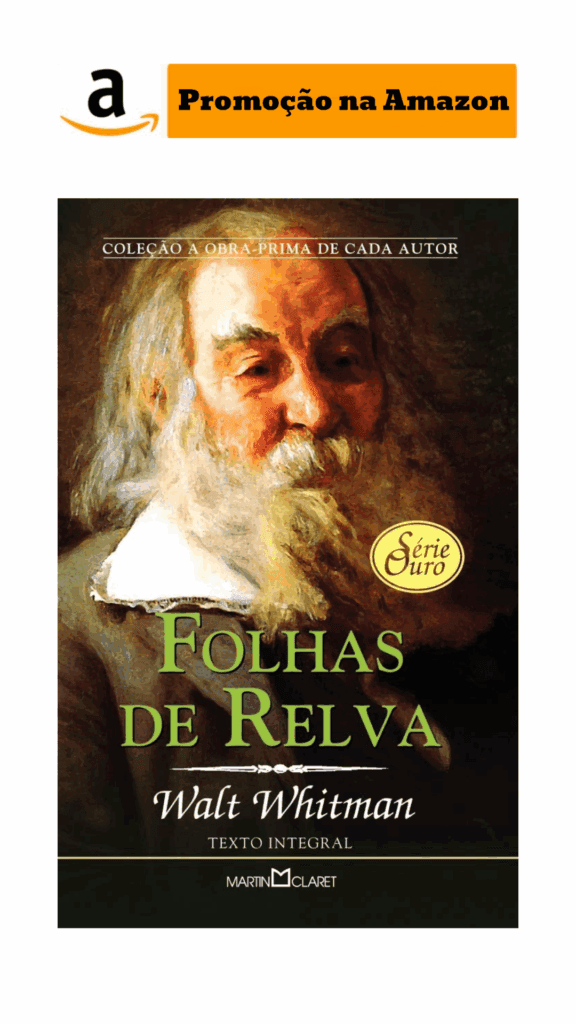
In 1855, Walt Whitman self-published the first edition of Leaves of Grass. It was a small book with only twelve poems, but it was very different from other poetry at the time. He used free verse, which means his poems did not have a regular rhythm or rhyme. He wrote in a natural and open style, speaking directly to the reader.
(Em 1855, Walt Whitman publicou por conta própria a primeira edição de Leaves of Grass. Era um livro pequeno com apenas doze poemas, mas era muito diferente da poesia da época. Ele usava verso livre, o que significa que seus poemas não tinham um ritmo ou rima regular. Ele escrevia de forma natural e aberta, falando diretamente com o leitor.)
The first poem in the book, “Song of Myself,” became one of his most famous works. In it, Whitman celebrates his own life and the lives of all people. He says that every human being is important and connected to nature and the universe. This idea shocked many readers at the time, especially because he also wrote about the body, sex, and love in a very open way.
(O primeiro poema do livro, “Song of Myself” (Canção de Mim Mesmo), se tornou uma de suas obras mais famosas. Nele, Whitman celebra sua própria vida e a vida de todas as pessoas. Ele diz que todo ser humano é importante e conectado à natureza e ao universo. Essa ideia chocou muitos leitores da época, especialmente porque ele também escrevia sobre o corpo, sexo e amor de forma muito aberta.)
Some people criticized the book, calling it immoral. But others, like the famous writer Ralph Waldo Emerson, praised it. Emerson wrote a letter to Whitman saying, “I greet you at the beginning of a great career.” Whitman was very proud of this letter and even printed it in the next edition of the book.
(Algumas pessoas criticaram o livro, chamando-o de imoral. Mas outras, como o famoso escritor Ralph Waldo Emerson, o elogiaram. Emerson escreveu uma carta para Whitman dizendo: “Saúdo você no início de uma grande carreira.” Whitman ficou muito orgulhoso dessa carta e até a imprimiu na edição seguinte do livro.)
Over the years, Whitman continued to work on Leaves of Grass. He added more poems and revised the ones he had already written. By the time of his death, the book had grown to include over 400 poems.
(Ao longo dos anos, Whitman continuou trabalhando em Leaves of Grass. Ele adicionou mais poemas e revisou os que já havia escrito. No momento de sua morte, o livro havia crescido e incluía mais de 400 poemas.)
THE CIVIL WAR
A Guerra Civil
The American Civil War (1861–1865) had a big effect on Walt Whitman’s life and writing. In 1862, he traveled to Washington, D.C., to care for his brother who was wounded in battle. While there, he visited army hospitals and began helping wounded soldiers. He gave them food, wrote letters for them, and simply talked to them to lift their spirits.
(A Guerra Civil Americana (1861–1865) teve um grande impacto na vida e na escrita de Walt Whitman. Em 1862, ele viajou para Washington, D.C., para cuidar de seu irmão que havia sido ferido em batalha. Enquanto estava lá, ele visitou hospitais militares e começou a ajudar soldados feridos. Dava comida, escrevia cartas para eles e apenas conversava com eles para levantar o ânimo.)
Whitman stayed in Washington for more than ten years. During this time, he worked as a clerk for the government. His experience with the soldiers deeply moved him, and he wrote many poems and essays about the war. Some of these poems appeared in a book called Drum-Taps (1865).
(Whitman ficou em Washington por mais de dez anos. Durante esse tempo, trabalhou como funcionário público. Sua experiência com os soldados o tocou profundamente, e ele escreveu muitos poemas e ensaios sobre a guerra. Alguns desses poemas apareceram em um livro chamado Drum-Taps (1865).)
The war made him think even more about the value of human life, the pain of suffering, and the importance of democracy. His poem “When Lilacs Last in the Dooryard Bloom’d” is a famous elegy for President Abraham Lincoln, who was assassinated in 1865.
(A guerra o fez refletir ainda mais sobre o valor da vida humana, a dor do sofrimento e a importância da democracia. Seu poema “When Lilacs Last in the Dooryard Bloom’d” (Quando as Lilases Floresceram pela Última Vez no Jardim) é uma elegia famosa para o presidente Abraham Lincoln, assassinado em 1865.)
LATER LIFE AND LEGACY
Vida Tardia e Legado
In 1873, Whitman suffered a stroke, which left him partially paralyzed. He moved to Camden, New Jersey, to live with his brother. Although he had trouble walking, he continued to write and revise his poetry. He also received visitors and gave advice to young writers.
(Em 1873, Whitman sofreu um derrame, que o deixou parcialmente paralisado. Ele se mudou para Camden, Nova Jersey, para viver com seu irmão. Embora tivesse dificuldades para andar, continuou escrevendo e revisando sua poesia. Também recebia visitantes e dava conselhos a jovens escritores.)
Whitman published the final edition of Leaves of Grass in 1892. It is often called the “Deathbed Edition.” He saw the book as his life’s work and legacy. He died on March 26, 1892, at the age of 72. He was buried in a tomb that he had designed himself in Harleigh Cemetery in Camden.
(Whitman publicou a edição final de Leaves of Grass em 1892. Ela é frequentemente chamada de “Edição do Leito de Morte.” Ele via o livro como a obra e legado de sua vida. Morreu em 26 de março de 1892, aos 72 anos. Foi enterrado em um túmulo que ele mesmo desenhou no Cemitério Harleigh, em Camden.)
STYLE AND THEMES
Estilo e Temas
Walt Whitman’s poetry was very different from the poetry before him. He broke many rules of grammar and structure. He used free verse, long lines, and lists of things and people. He wrote in the voice of the common man, not as a distant or formal poet. His language was often simple but powerful.
(A poesia de Walt Whitman era muito diferente da poesia que veio antes dele. Ele quebrou muitas regras de gramática e estrutura. Usava verso livre, linhas longas e listas de coisas e pessoas. Escrevia com a voz do homem comum, não como um poeta distante ou formal. Sua linguagem era frequentemente simples, mas poderosa.)
INFLUENCE
Influência
Walt Whitman’s work influenced many writers, both in the United States and around the world. Poets like Allen Ginsberg, Langston Hughes, and Pablo Neruda were inspired by him. He helped to create a new kind of poetry that was modern, honest, and democratic.
(A obra de Walt Whitman influenciou muitos escritores, tanto nos Estados Unidos quanto ao redor do mundo. Poetas como Allen Ginsberg, Langston Hughes e Pablo Neruda foram inspirados por ele. Ele ajudou a criar um novo tipo de poesia que era moderna, honesta e democrática.)
Today, Walt Whitman is remembered as the “father of free verse” and a symbol of American spirit and creativity. His poems continue to be read and loved by people of all ages.
(Hoje, Walt Whitman é lembrado como o “pai do verso livre” e um símbolo do espírito e da criatividade americanos. Seus poemas continuam sendo lidos e amados por pessoas de todas as idades.)
Veja também:
⇒ F. SCOTT FITZGERALD – Biografia (Inglês e Português)
⇒ WILLIAM SHAKESPEARE – Biografia (Inglês e Português)