

Hi there, tudo certinho por aí?
Que tal aprender inglês com uma das histórias mais fascinantes da mitologia?
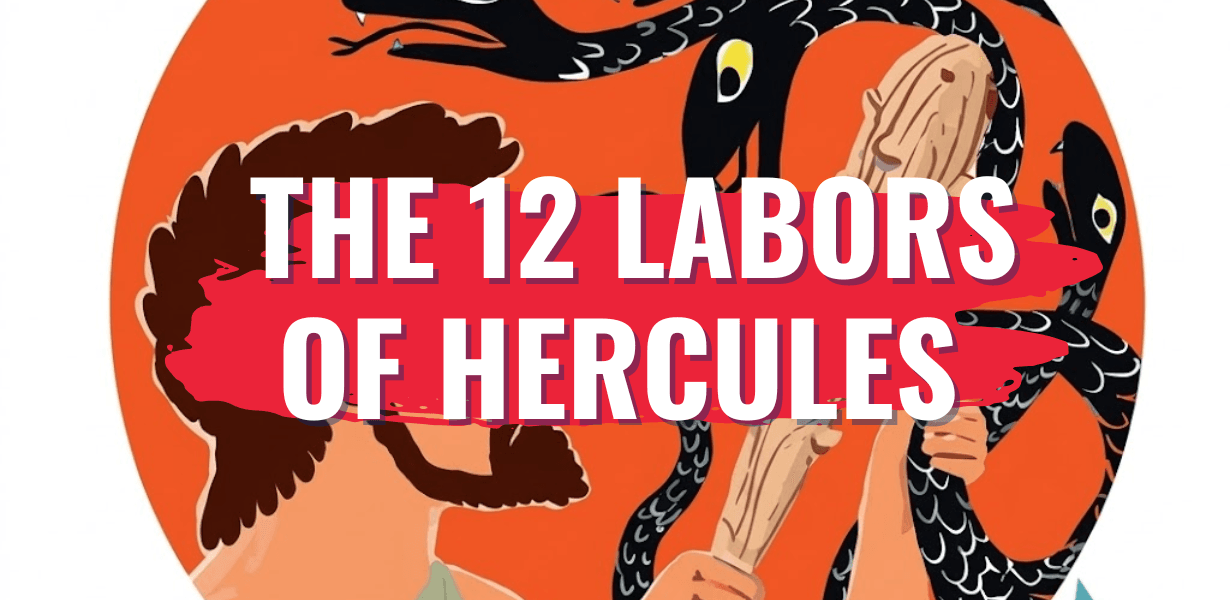
Hoje você vai mergulhar em Os Doze Trabalhos de Hércules, adaptados em um inglês mais acessível, ideal para quem quer evoluir no idioma sem abrir mão de uma boa narrativa.
Além do texto em inglês, você também terá a tradução em português para facilitar a compreensão e um áudio gravado por um locutor nativo (também no vídeo), perfeito para treinar sua escuta e pronúncia.
Prepare-se para aprender inglês de forma leve, envolvente e eficiente.
Bons estudos e let’s do this !
VÍDEO
ÁUDIO
THE TWELVE LABORS OF HERCULES
(OS DOZE TRABALHOS DE HÉRCULES)
CHAPTER 1: A MOMENT OF MADNESS
(CAPÍTULO 1: UM MOMENTO DE LOUCURA)
The gods and goddesses admired young Alcides for his beauty and bravery. All of them, except the goddess Hera. She hated him because he was the secret son of the god Zeus, her husband. (Os deuses e deusas admiravam o jovem Alcides por sua beleza e bravura. Todos eles, exceto a deusa Hera. Ela o odiava porque ele era o filho secreto do deus Zeus, seu marido.)
Hera was tired of her unfaithful husband, who loved her but also loved other women and goddesses. She was also tired of seeing Alcides live happily in his palace, so one day she made him go mad. (Hera estava cansada de seu marido infiel, que a amava mas também amava outras mulheres e deusas. Ela também estava cansada de ver Alcides viver feliz em seu palácio, então um dia ela o fez enlouquecer.)
“Alcides, take your bow and arrows, and kill your children!” she commanded. (“Alcides, pegue seu arco e flechas e mate seus filhos!” ela ordenou.)
Unfortunately, he obeyed. When he came back to his senses, he was crushed by shame and grief. He ran away and traveled for several days to the temple at Delphi, where he wanted to ask the god Apollo for advice. To do this, he had to speak to the high priestess, who passed on the god’s words. (Infelizmente, ele obedeceu. Quando voltou a si, foi esmagado pela vergonha e pelo luto. Ele fugiu e viajou por vários dias até o templo de Delfos, onde queria pedir conselho ao deus Apolo. Para isso, ele precisava falar com a grande sacerdotisa, que transmitia as palavras do deus.)
“I was waiting for you, Heracles!” she said. (“Eu estava esperando por você, Hércules!” ela disse.)
“My name is Alcides.” (“Meu nome é Alcides.”)
“From now on, your name is Heracles. Do you know that killing your children is the greatest of all crimes? To be forgiven, go to King Eurystheus and obey him. This is the will of the gods.” (“A partir de agora, seu nome é Hércules. Você sabe que matar seus filhos é o maior de todos os crimes? Para ser perdoado, vá até o rei Euristeu e obedeça-o. Esta é a vontade dos deuses.”)
Heracles lowered his head. His shame and sadness grew even stronger. He wept. (Hércules baixou a cabeça. Sua vergonha e tristeza cresceram ainda mais. Ele chorou.)
King Eurystheus received his cousin Heracles coldly. He was afraid of him and wanted only one thing, to send him far away from his kingdom. (O rei Euristeu recebeu seu primo Hércules friamente. Ele tinha medo dele e queria apenas uma coisa, mandá-lo para longe de seu reino.)
“Bring me the skin of the invincible lion of Nemea!” he said. “This will be your first labor.” (“Traga-me a pele do invencível leão de Nemeia!” ele disse. “Este será seu primeiro trabalho.”)
As soon as he arrived at Nemea, Heracles spotted the enormous lion. He pulled his bow and shot, but his arrows simply slid off the animal’s hard skin, which no weapon could pierce. So he had the idea of cutting a club from an olive tree trunk. (Assim que chegou a Nemeia, Hércules avistou o enorme leão. Ele puxou seu arco e atirou, mas suas flechas simplesmente deslizavam pela pele dura do animal, que nenhuma arma conseguia perfurar. Então ele teve a ideia de cortar uma clava do tronco de uma oliveira.)
He found the monster sleeping in its cave. He walked toward it, threatened it with his club, grabbed it, squeezed its throat, and choked it to death. The lion of Nemea was dead. (Ele encontrou o monstro dormindo em sua caverna. Aproximou-se dele, ameaçou-o com sua clava, agarrou-o, apertou sua garganta e o estrangulou até a morte. O leão de Nemeia estava morto.)
After that, Heracles cut open the beast’s belly and removed its organs with his bare hands. He cleaned the skin that no weapon could pierce and put it on his back like an armored cape. (Depois disso, Hércules abriu o ventre da fera e removeu seus órgãos com as próprias mãos. Ele limpou a pele que nenhuma arma podia perfurar e a colocou nas costas como uma capa blindada.)
Then he returned to his cousin in the great city of Mycenae, in southern Greece. (Então ele voltou para seu primo na grande cidade de Micenas, no sul da Grécia.)
“You… you escaped the lion?” said Eurystheus, panicking. (“Você… você escapou do leão?” disse Euristeu, em pânico.)
Terrified, the king hid inside a large bronze jar at the entrance to his city, his refuge in times of great danger. (Aterrorizado, o rei se escondeu dentro de um grande jarro de bronze na entrada de sua cidade, seu refúgio em tempos de grande perigo.)
“Leave immediately, Heracles, and kill the Hydra of Lerna.” (“Parta imediatamente, Hércules, e mate a Hidra de Lerna.”)
“The Hydra? The giant nine-headed serpent?” (“A Hidra? A serpente gigante de nove cabeças?”)
“Exactly. This will be your second labor.” (“Exatamente. Este será seu segundo trabalho.”)
CHAPTER 2: THE HYDRA, THE BOAR, AND THE DEER
(CAPÍTULO 2: A HIDRA, O JAVALI E A CORÇA)
Heracles rode quickly on a chariot driven by his nephew Iolaus. (Hércules cavalgou rapidamente em uma carruagem conduzida por seu sobrinho Iolau.)
“Slow down, there are the marshes of Lerna,” he said at last. (“Vá mais devagar, ali estão os pântanos de Lerna,” ele disse por fim.)
“Don’t worry, my boy. I know how to kill this monster.” (“Não se preocupe, meu rapaz. Eu sei como matar este monstro.”)
Full of courage, Heracles shot flaming arrows at the Hydra and struck its horrible heads with his club, cutting them off. But each time a head was cut, a new one grew back. (Cheio de coragem, Hércules atirou flechas flamejantes na Hidra e golpeou suas horríveis cabeças com sua clava, cortando-as. Mas cada vez que uma cabeça era cortada, uma nova crescia em seu lugar.)
“We’ll never manage this,” cried Iolaus. (“Jamais conseguiremos isso,” gritou Iolau.)
“Light a branch on fire and burn each wound to stop the head from growing back.” (“Acenda um galho e queime cada ferida para impedir que a cabeça cresça de volta.”)
This is how Heracles destroyed all nine heads. He remembered to bury the middle one, which was immortal. (Foi assim que Hércules destruiu todas as nove cabeças. Ele se lembrou de enterrar a do meio, que era imortal.)
Then he cut the monster’s body into small pieces before returning to his cousin, very pleased with himself. (Então ele cortou o corpo do monstro em pequenos pedaços antes de retornar ao seu primo, muito satisfeito consigo mesmo.)
“The Hydra is dead,” announced Heracles, triumphant. (“A Hidra está morta,” anunciou Hércules, triunfante.)
“Uh… very well,” admitted Eurystheus, who was becoming more and more afraid of the young hero. (“Hum… muito bem,” admitiu Euristeu, que estava ficando cada vez mais com medo do jovem herói.)
“Now go and bring me the wild boar that is destroying Mount Erymanthos. I want it alive.” (“Agora vá e traga-me o javali selvagem que está destruindo o Monte Erimanto. Eu o quero vivo.”)
When Heracles arrived at Erymanthos after a long journey, it was winter. He searched for the enormous animal and found it. He chased it through the snow for days and days. Finally, he threw a huge net over it, tied its legs, and carried the tied-up beast on his shoulders. (Quando Hércules chegou ao Erimanto após uma longa jornada, era inverno. Ele procurou o enorme animal e o encontrou. Perseguiu-o pela neve por dias e dias. Por fim, jogou uma enorme rede sobre ele, amarrou suas patas e carregou a fera amarrada nos ombros.)
“My cousin will be very happy to see you,” Heracles said to the animal. (“Meu primo ficará muito feliz em ver você,” Hércules disse ao animal.)
As usual, Eurystheus hid in his jar. He trembled at the sight of the boar growling with rage. (Como de costume, Euristeu se escondeu em seu jarro. Ele tremeu ao ver o javali rosnando de raiva.)
“Capture the deer of Ceryneia,” he told his cousin. “I want it alive too. This will be your fourth labor.” (“Capture a corça de Ceríneia,” ele disse ao primo. “Eu a quero viva também. Este será seu quarto trabalho.”)
A few days of walking brought Heracles to the forest where this deer lived, stronger than a bull. It was one of the five golden-antlered deer belonging to Artemis, goddess of the hunt. Long ago, Artemis had harnessed four of them to her chariot and left the fifth free in the mountains. (Alguns dias de caminhada levaram Hércules à floresta onde vivia essa corça, mais forte que um touro. Era uma das cinco corças de chifres dourados pertencentes a Ártemis, deusa da caça. Há muito tempo, Ártemis havia atrelado quatro delas à sua carruagem e deixado a quinta livre nas montanhas.)
“If I hurt this deer, I will anger the powerful goddess,” worried the hero. “I must be careful.” (“Se eu machucar esta corça, irritarei a poderosa deusa,” preocupou-se o herói. “Devo ter cuidado.”)
Heracles entered the forest. He walked forward, turned back, went farther, and kept searching. Suddenly, he spotted the deer. He ran and tried to catch it, but without success. It took him an entire year to finally capture the golden-antlered deer. He gently placed it on his shoulders and returned to Mycenae. (Hércules entrou na floresta. Ele avançou, voltou, foi mais longe e continuou procurando. De repente, avistou a corça. Correu e tentou capturá-la, mas sem sucesso. Levou um ano inteiro para finalmente capturar a corça de chifres dourados. Ele a colocou delicadamente nos ombros e voltou para Micenas.)
CHAPTER 3: FOUR MORE LABORS
(CAPÍTULO 3: MAIS QUATRO TRABALHOS)
“Killing the birds of Stymphalia” was Heracles’ fifth labor. These eagles with bronze beaks and claws lived beside a lake surrounded by thick trees. They ate all the crops and left nothing for the people. (“Matar as aves de Estínfalo” foi o quinto trabalho de Hércules. Essas águias com bicos e garras de bronze viviam às margens de um lago cercado por árvores densas. Elas comiam todas as colheitas e não deixavam nada para o povo.)
“How can I make them come out of this forest?” wondered Heracles. (“Como posso fazê-las sair desta floresta?” perguntou-se Hércules.)
“Take these castanets!” whispered the goddess Athena. (“Pegue estas castanholas!” sussurrou a deusa Atena.)
Quick as lightning, Heracles climbed the hill above the lake. He shook the castanets loudly and for a long time. *Clack, clack, clack!* Dozens of birds flew up into the air. Heracles pulled his bow, shot his arrows, and killed them. (Rápido como um raio, Hércules subiu a colina acima do lago. Ele sacudiu as castanholas com força e por muito tempo. *Clac, clac, clac!* Dezenas de pássaros alçaram voo. Hércules puxou seu arco, disparou suas flechas e os matou.)
Eurystheus did not congratulate his cousin for this new achievement. He thought Heracles was too proud. So, to teach him a lesson in humility, he ordered him to clean the stables of King Augeas in a single day, stables that had never been cleaned. (Euristeu não parabenizou seu primo por essa nova façanha. Ele achava que Hércules era orgulhoso demais. Por isso, para lhe dar uma lição de humildade, ordenou-lhe que limpasse as cocheiras do rei Augias em um único dia, cocheiras que jamais haviam sido limpas.)
The road to Augeas’ kingdom was long. Heracles hurried and thought hard. He did not want to clean the filth with his bare hands. (A estrada até o reino de Augias era longa. Hércules se apressou e pensou muito. Ele não queria limpar a sujeira com as próprias mãos.)
“That would not be worthy of a hero like me,” he said to himself as he arrived at the king’s palace. “I have only one solution, a clever trick.” (“Isso não seria digno de um herói como eu,” disse a si mesmo ao chegar ao palácio do rei. “Tenho apenas uma solução, um truque inteligente.”)
Heracles studied the place. Two small rivers gave him an idea. He broke down the stable walls and moved earth and rocks to redirect the rivers so that they flowed through the buildings. Then he let the fast-moving water carry all the filth far away. One day was enough. The stables were clean. (Hércules estudou o lugar. Dois pequenos rios lhe deram uma ideia. Ele derrubou as paredes das cocheiras e moveu terra e pedras para desviar os rios de modo que fluíssem pelos edifícios. Então deixou a água corrente levar toda a sujeira para longe. Um dia foi suficiente. As cocheiras estavam limpas.)
He returned to Mycenae. Surprised, Eurystheus listened to the story of this latest feat. (Ele voltou para Micenas. Surpreso, Euristeu ouviu a história dessa mais recente façanha.)
“Very well. Now here is your seventh labor. Bring me the bull of Crete, alive. I am waiting.” (“Muito bem. Agora este é seu sétimo trabalho. Traga-me o touro de Creta, vivo. Estou esperando.”)
What a journey! Heracles sailed to the island of Crete by boat. As soon as he arrived, he walked here and there, searching for the magnificent bull. He barely slept, always resting under the stars, and continued his quest each day. (Que jornada! Hércules navegou até a ilha de Creta de barco. Assim que chegou, caminhou de um lado para o outro em busca do magnífico touro. Mal dormia, sempre descansando sob as estrelas, e continuava sua busca a cada dia.)
Finally, one morning, he spotted the bull. There it was! He was frightened by the animal’s strength, but he launched his attack. He grabbed it by the horns and was thrown to the ground. He attacked again, avoided the kicks of its hooves and the fire coming from its nostrils. Finally, he controlled it with his bare hands. He calmed it with gentle strokes and soft words. (Por fim, numa manhã, avistou o touro. Ali estava ele! Ficou assustado com a força do animal, mas lançou seu ataque. Agarrou-o pelos chifres e foi arremessado ao chão. Atacou novamente, desviou dos coices de seus cascos e do fogo que saía de suas narinas. Por fim, dominou-o com as próprias mãos. Acalmou-o com carícias suaves e palavras gentis.)
Then he swam back to Greece, riding on the bull’s back. When Eurystheus saw Heracles and the bull, as gentle as a little dog, he could not believe his eyes. (Então nadou de volta à Grécia montado nas costas do touro. Quando Euristeu viu Hércules e o touro, manso como um cachorrinho, não pôde acreditar no que via.)
“Since you are so proud of yourself, go and fetch the four mares of King Diomedes,” he said. (“Já que você é tão orgulhoso de si mesmo, vá buscar as quatro éguas do rei Diomedes,” ele disse.)
This eighth labor was very dangerous, because these mares ate people. They were terrifying when hungry, but calm after a good meal. Still, Heracles set off alone, on foot, heading north. (Este oitavo trabalho era muito perigoso, pois essas éguas devoravam pessoas. Eram aterrorizantes quando com fome, mas calmas após uma boa refeição. Mesmo assim, Hércules partiu sozinho, a pé, em direção ao norte.)
If he was afraid, he hid it well. He began by greeting King Diomedes in his palace. (Se tinha medo, escondia bem. Começou cumprimentando o rei Diomedes em seu palácio.)
“My mares will swallow you whole,” laughed the wicked king. “And don’t expect any help from me.” (“Minhas éguas vão te engolir inteiro,” riu o rei malvado. “E não espere nenhuma ajuda de mim.”)
Heracles did not hesitate. He seized Diomedes, dragged him into the stables, and let the mares devour their master. After such a meal, the animals were happy to be led to Mycenae. (Hércules não hesitou. Ele agarrou Diomedes, arrastou-o para as cocheiras e deixou as éguas devorarem seu amo. Após tal refeição, os animais ficaram contentes em ser conduzidos até Micenas.)
Heracles walked slowly. Tiredness, loneliness, and worry had been his companions for many years. When would he receive forgiveness from the gods for his crime? He did not know. (Hércules caminhava devagar. O cansaço, a solidão e a preocupação foram seus companheiros por muitos anos. Quando receberia o perdão dos deuses por seu crime? Ele não sabia.)
The ninth labor Eurystheus gave Heracles seemed simple, but it was not. Eurystheus wanted the belt of Hippolyta, queen of the Amazons. He knew that this nation of women, excellent hunters and warriors, made even the bravest soldiers tremble. (O nono trabalho que Euristeu deu a Hércules parecia simples, mas não era. Euristeu queria o cinto de Hipólita, rainha das Amazonas. Ele sabia que essa nação de mulheres, excelentes caçadoras e guerreiras, fazia até os soldados mais corajosos tremerem.)
Heracles sailed to the distant land of the Amazons. He entered the port, came ashore, and left his ship in the care of his companions. He searched for the queen, found her, and explained the reason for his visit. (Hércules navegou até a terra distante das Amazonas. Entrou no porto, desembarcou e deixou seu navio aos cuidados de seus companheiros. Procurou a rainha, encontrou-a e explicou o motivo de sua visita.)
“I will gladly give you my belt,” said Hippolyta with a smile. (“Darei a você meu cinto com prazer,” disse Hipólita com um sorriso.)
But suddenly… what were those shouts? (Mas de repente… que gritos eram aqueles?)
“My friends, come quickly! Strangers are trying to kidnap our queen!” cried a beautiful Amazon on the port. (“Minhas amigas, venham rápido! Estranhos estão tentando raptar nossa rainha!” gritou uma bela Amazona no porto.)
No one recognized her, but it was the goddess Hera in disguise… Hera, who still hated Heracles and hoped for his death. (Ninguém a reconheceu, mas era a deusa Hera disfarçada… Hera, que ainda odiava Hércules e esperava sua morte.)
The women immediately took up their weapons, mounted their horses, and attacked Heracles’ companions. What a battle! (As mulheres imediatamente pegaram suas armas, montaram seus cavalos e atacaram os companheiros de Hércules. Que batalha!)
“I have been betrayed,” thought the hero. “This queen smiles at me while attacking my crew.” (“Fui traído,” pensou o herói. “Esta rainha me sorri enquanto ataca minha tripulação.”)
Without hesitating, he killed Hippolyta with his sword, grabbed her belt, defeated many Amazons, and sailed back to Mycenae. (Sem hesitar, ele matou Hipólita com sua espada, pegou seu cinto, derrotou muitas Amazonas e navegou de volta para Micenas.)
For once, Eurystheus was looking forward to Heracles’ return. A belt could not harm him, and he was happy to offer it to his daughter. (Pela primeira vez, Euristeu aguardava ansiosamente o retorno de Hércules. Um cinto não podia lhe fazer mal, e ele ficou feliz em oferecê-lo à sua filha.)
“Capturing the cattle of Geryon will be your tenth labor,” he said. “You will find them on the island of Erytheia, to the west of the great ocean.” (“Capturar o gado de Gerião será seu décimo trabalho,” ele disse. “Você os encontrará na ilha de Eriteia, a oeste do grande oceano.”)
Heracles crossed the southern sea and the African desert under terrible heat. He was exhausted and felt lost in a hostile landscape. (Hércules cruzou o mar do sul e o deserto africano sob um calor terrível. Estava exausto e se sentia perdido em uma paisagem hostil.)
“You are burning me, Helios, terrible sun god!” he cried. “Stop, or beware of my arrows!” (“Você está me queimando, Hélio, terrível deus do sol!” ele gritou. “Pare, ou cuidado com minhas flechas!”)
“No, don’t shoot. You would hurt me,” replied the god. (“Não, não atire. Você me machucaria,” respondeu o deus.)
“Agreed, but on one condition,” proposed Heracles. “Lend me your golden cup to cross the ocean.” (“Concordo, mas com uma condição,” propôs Hércules. “Empreste-me sua taça dourada para cruzar o oceano.”)
The sun god accepted, and soon Heracles sailed across on this magnificent cup. On the island, he knocked out the shepherd, his dog, and Geryon… the three-headed giant who came to help them. Then he forced the cattle onto the golden cup and crossed the ocean back to Europe. (O deus do sol aceitou, e em breve Hércules navegou nessa magnífica taça. Na ilha, ele nocauteou o pastor, seu cão e Gerião… o gigante de três cabeças que veio ajudá-los. Então forçou o gado a entrar na taça dourada e atravessou o oceano de volta à Europa.)
On the road to Mycenae, thieves attacked him and tried to steal the cattle. He killed many of them, but then: “Disaster! I have no more arrows!” he sighed. “Oh Zeus, my father, help me!” (Na estrada para Micenas, ladrões o atacaram e tentaram roubar o gado. Ele matou muitos deles, mas então: “Que desastre! Não tenho mais flechas!” ele suspirou. “Ó Zeus, meu pai, ajuda-me!”)
The great god heard him and made a rain of stones fall from the sky. Heracles threw them at the thieves, who ran away. Happy again, he continued on his way. (O grande deus o ouviu e fez uma chuva de pedras cair do céu. Hércules as atirou nos ladrões, que fugiram. Feliz novamente, ele continuou seu caminho.)
But Hera had not forgotten Heracles. She was watching him, and suddenly she sent dozens of gadflies to attack the herd. The cattle scattered in all directions to escape the stinging insects. Heracles could only round up a few of them for the rest of the journey to Mycenae. (Mas Hera não havia esquecido Hércules. Ela o observava e, de repente, enviou dezenas de moscas-varejeiras para atacar o rebanho. O gado se dispersou em todas as direções para escapar dos insetos picantes. Hércules conseguiu reunir apenas alguns deles para o resto da viagem até Micenas.)

CHAPTER 4: CERBERUS, THE DOG OF THE UNDERWORLD
(CAPÍTULO 4: CÉRBERO, O CÃO DO SUBMUNDO)
Eurystheus then gave his cousin an eleventh labor. He wanted to see Cerberus, the terrifying dog that guarded the underworld. Heracles shivered. He dreaded the underworld, where the fearsome god Hades ruled, but he had to obey. (Euristeu então deu ao primo o décimo primeiro trabalho. Ele queria ver Cérbero, o aterrorizante cão que guardava o submundo. Hércules estremeceu. Ele temia o submundo, onde reinava o temível deus Hades, mas tinha que obedecer.)
Once underground, he walked until he reached the Styx, the dark river that surrounds the underworld. Suddenly, he heard furious barking. Cerberus was there, with his three dog heads, his reptile tail, and his back covered in snakes. (Uma vez no submundo, ele caminhou até chegar ao Estige, o rio escuro que envolve o submundo. De repente, ouviu latidos furiosos. Cérbero estava ali, com suas três cabeças de cão, sua cauda de réptil e suas costas cobertas de serpentes.)
“Stop! The dead do not leave here, and the living do not enter!” he barked fiercely. (“Pare! Os mortos não saem daqui, e os vivos não entram!” ele latiu ferozmente.)
Yet clever Heracles managed to pass. He slipped between the shadows of the dead, walked along the walls of Tartarus, where those who did wrong on earth were imprisoned, and passed near the Elysian Fields, where good people lived peacefully. (Mesmo assim, o astuto Hércules conseguiu passar. Ele se esgueirou entre as sombras dos mortos, caminhou ao longo das paredes do Tártaro, onde aqueles que fizeram o mal na terra estavam aprisionados, e passou perto dos Campos Elísios, onde as pessoas boas viviam em paz.)
At last, he met Hades. (Por fim, ele encontrou Hades.)
“I will allow you to take Cerberus,” the god agreed, “on one condition.” (“Permitirei que você leve Cérbero,” o deus concordou, “com uma condição.”)
“Which one?” (“Qual?”)
“You must defeat him without weapons.” (“Você deve vencê-lo sem armas.”)
Heracles promised. Then he went back to Cerberus, who growled, showed his teeth in all three mouths, and made his snake heads hiss. Heracles approached without fear. He grabbed the beast’s neck with his hands. But the monster fought back, stinging the hero again and again with his scorpion tail. Heracles held on, until the beast finally fainted and fell to the ground. (Hércules prometeu. Então voltou até Cérbero, que rosnou, mostrou os dentes nas três bocas e fez as cabeças de serpente sibilarem. Hércules se aproximou sem medo. Agarrou o pescoço da fera com as mãos. Mas o monstro reagiu, picando o herói repetidas vezes com sua cauda de escorpião. Hércules aguentou firme, até que a fera finalmente desmaiou e caiu ao chão.)
He carried it in his arms and returned to the world of the living. The fresh air revived Cerberus, who obeyed Heracles without arguing. (Ele o carregou nos braços e voltou ao mundo dos vivos. O ar fresco reviveu Cérbero, que obedeceu a Hércules sem resistir.)
“Cousin, take this monster back to the underworld and come back!” shouted Eurystheus from inside his jar. (“Primo, leve este monstro de volta ao submundo e volte!” gritou Euristeu de dentro de seu jarro.)
CHAPTER 5: THE GOLDEN APPLES
(CAPÍTULO 5: AS MAÇÃS DOURADAS)
Heracles took Cerberus back to the underworld and returned to Mycenae. (Hércules levou Cérbero de volta ao submundo e retornou a Micenas.)
“Go and pick three golden apples from the garden of the Hesperides… and hurry!” ordered Eurystheus. “This will be your twelfth labor.” (“Vá e colha três maçãs douradas do jardim das Hespérides… e se apresse!” ordenou Euristeu. “Este será seu décimo segundo trabalho.”)
Heracles did not know where this garden was. He only knew it was guarded by nymphs and a hundred-headed dragon. (Hércules não sabia onde ficava esse jardim. Ele sabia apenas que era guardado por ninfas e um dragão de cem cabeças.)
“Whoever keeps searching will find it!” he told himself to stay motivated. (“Quem continua procurando acaba encontrando!” ele disse a si mesmo para se manter motivado.)
He walked north, then south, crossed the sea, traveled through Africa, went through Asia. He got lost, turned back, and headed toward the great ocean. At last, Heracles arrived before the garden of the Hesperides. (Ele caminhou para o norte, depois para o sul, cruzou o mar, viajou pela África, passou pela Ásia. Perdeu-se, voltou atrás e se dirigiu para o grande oceano. Por fim, Hércules chegou diante do jardim das Hespérides.)
Nearby, the giant Atlas was holding up the sky on his shoulders. (Por perto, o gigante Atlas sustentava o céu sobre seus ombros.)
“If I take this heavy load from you, will you pick three golden apples for me?” (“Se eu tirar este pesado fardo de você, você colherá três maçãs douradas para mim?”)
“With pleasure… it will be easy for me,” replied the giant. (“Com prazer… será fácil para mim,” respondeu o gigante.)
No sooner said than done. But since Atlas did not want to take the sky back on his shoulders, he offered to go to Mycenae in Heracles’ place. (Dito e feito. Mas como Atlas não queria retomar o céu sobre seus ombros, ele se ofereceu para ir a Micenas no lugar de Hércules.)
“Of course,” agreed clever Heracles, “but can you help me for a moment?” (“Claro,” concordou o astuto Hércules, “mas você pode me ajudar por um momento?”)
“What for?” asked Atlas, suspicious. (“Para quê?” perguntou Atlas, desconfiado.)
“Just long enough for me to put a cushion on my shoulders.” (“Só o tempo suficiente para eu colocar uma almofada nos meus ombros.”)
The trusting giant took the sky back on his shoulders. Heracles grabbed the golden apples from the ground and ran away. (O gigante confiante retomou o céu sobre seus ombros. Hércules pegou as maçãs douradas do chão e fugiu.)
Heracles felt both proud of his last achievement and completely exhausted. (Hércules se sentia ao mesmo tempo orgulhoso de sua última façanha e completamente exausto.)
“Twelve labors in twelve years, what will Eurystheus ask of me next?” he worried. (“Doze trabalhos em doze anos, o que Euristeu me pedirá a seguir?” ele se preocupou.)
But a pleasant surprise was waiting for him in Mycenae. (Mas uma agradável surpresa o esperava em Micenas.)
“Cousin, your punishment is complete,” declared the king. “The gods and goddesses are satisfied. You have paid for your crime. Now go home.” (“Primo, sua punição está completa,” declarou o rei. “Os deuses e deusas estão satisfeitos. Você pagou por seu crime. Agora vá para casa.”)
That day, a new life began for Heracles. It would be long and beautiful, filled with small troubles, great joys, and many more adventures. (Naquele dia, uma nova vida começou para Hércules. Seria longa e bela, repleta de pequenos problemas, grandes alegrias e muitas outras aventuras.)
Veja também:
⇒ TEXTO PARA PRATICAR: How to 10x Your Productivity [com tradução e áudio]
⇒ APRIL FOOL’S DAY | ORIGEM, HISTÓRIA E COMO É CELEBRADO
⇒ DIÁLOGO PARA PRATICAR: TECHNOLOGY’S KILLING ME! [com áudio]
⇒ SWEET TOOTH | O que significa esta expressão [com áudio]